
Applied Anthropology Laboratory and consulting
Applied Anthropology Laboratory and consulting
Conducted in a territory profoundly transformed by the Belo Monte hydropower plant and adjacent to the controversial Belo Sun mining project, the study takes place in a context of extreme climate stress: two consecutive years of drought were officially recognized by municipal decrees no. 200/2024, 233/2024, and 249/2024, following a critical drop in the Xingu River level, massive agricultural losses, and an explosion of vegetation fires.
Climate and work: daily life under pressure
Based on 899 face-to-face interviews with outdoor workers, the CLISEVE© Altamira 2025 study shows that climate change profoundly affects working conditions. The results reveal a shared perception across the workforce: 79% consider the climate situation worrisome, 73% believe urgent action is needed, and 68% recognize its human origin — a consensus that cuts across professions and social groups.
In the sectors of agriculture, fishing, transport, construction, and urban sanitation, workers’ accounts converge: extreme heat, fatigue, dehydration, headaches, and stress have become part of daily life. Nearly 90% report feeling direct climate-related effects on their health, and more than half accumulate multiple symptoms. Emotionally, one-third describe themselves as exhausted, and one in five experiences a diffuse state of anxiety; among the workers interviewed, feelings of insecurity and loss of bearings reflect the growing impact of climate change on everyday life and well-being.
Many workers also argue that they should be able to stop working once temperatures exceed a certain threshold — a call for a “climate optional stoppage” on days of extreme heat. The study also records intentions to leave the profession altogether, a “red flag” for climate resilience, linked to physical and emotional exhaustion.
In the context of COP30 (Belém, 2025), the report provides an empirical basis for public policies and adaptation measures, highlighting five pathways: a municipal campaign on health and climate, social mediation, psychological support, the “90-Day Companies” program, and the CLISEVE© certification, designed to recognize good practices for preventing climate-health risks in the workplace.
In Pará, the state hosting COP30, a groundbreaking portrait of climate impacts on workers: the CLISEVE© study brings together scientific knowledge and work-organization dynamics to measure the effects on workers’ physical and mental health and to guide climate adaptation.
In Altamira (PA), in the Amazon, the CLISEVE© platform — a joint initiative of the LAPA-Research laboratory (PPGECC/UFRJ) and the Croissance Bleue agency (Paris) — presents a pioneering study revealing how climate is reshaping working conditions in the region. Drawing on the direct experience of fishers, farmers, gold miners, motorcycle taxi drivers, sanitation workers, street vendors, and construction workers, the study translates the everyday reality of heat, drought, and wildfire smoke into concrete indicators of health, mental health, and work organization — an unprecedented reading of climate through the lens of the world of labor, beyond traditional meteorological or biomedical records.
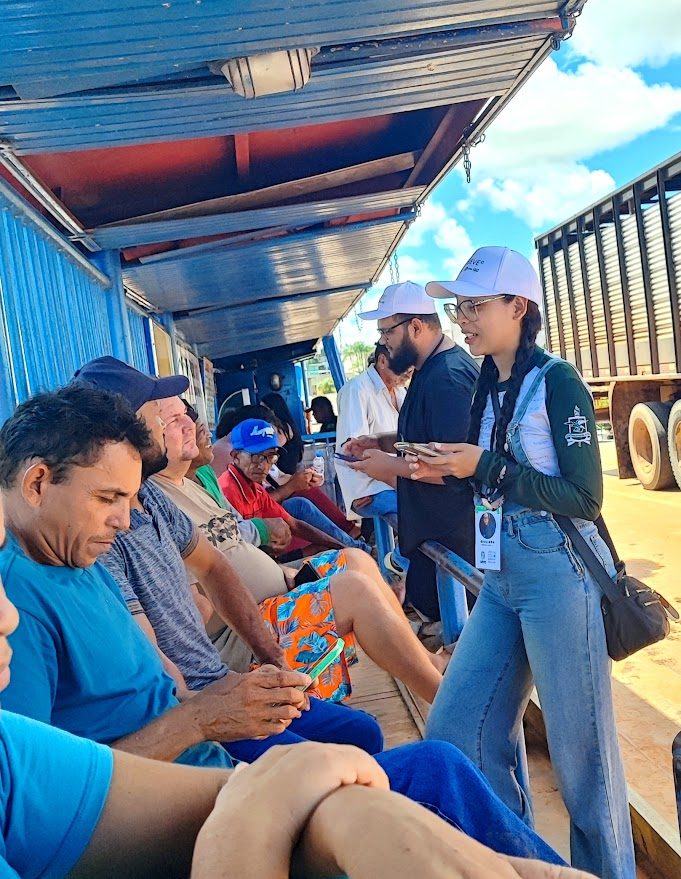

The demands expressed by workers point to clear pathways
In agriculture and fishing, 61% request direct technical support at worksites and 52% ask for regular medical follow-up. Among construction workers, 78% call for water points, 59% for more shaded areas, and 55% for adjusted working hours on extremely hot days. Across all sectors, 42% of respondents want training on heat exposure, 48% request information about protective equipment, 30.5% ask for health guidance, 31% request access to information on public support programs, and 15% mention administrative barriers that limit their capacity to adapt. These convergences point to the emergence of a community of action that sees water access, medical follow-up, technical support, and the production of local data as the foundations of a collective response.


“The anxiety comes all the time. When the heat hits, it feels like my body and my mind can’t take it anymore. I do all kinds of tests and nothing shows up. I can’t sleep at night, my legs feel heavy — and there are hundreds of people ahead of me just to get an appointment with the psychiatrist.” (Street vendor, Altamira, 2025)
We need your consent to load the translations
We use a third-party service to translate the website content that may collect data about your activity. Please review the details in the privacy policy and accept the service to view the translations.